Breaking Points

Admin • February 11, 2020

In the 14 years, I have been in the fitness industry, I have heard some interesting stories about people reaching their breaking points with their poor health.


For one client, it was when he was told his weight rendered him ineligible for the bucket truck he worked in & that he would be moved to a desk job. For another, it was not being allowed to participate in a beloved hobby beyond a certain weight. For a third, it was collapsing while on a hike.
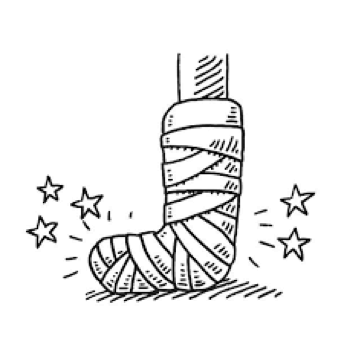
But for my client & friend Sheri the breaking point came with an audible snap. In October 2017, Sheri was out to dinner with friends & slipped in some water. Her broken foot was complicated & required surgery. Surgery was followed by 12 weeks in a boot, non-weight bearing.


Sheri had been over-weight most of her life & as she shared with me in February of 2019 was “good at telling herself lies.” As a result, she had given up trying to lose weight.


The boot changed all of that. It made it very difficult to get around, as she lacked the strength & cardiovascular conditioning to support her body weight on crutches. Instead, she needed to use a scooter, which in turn made “everything a big deal.”

During this time Sheri had been promoted at her work as a therapist. She was now a supervisor of other therapists & she believed that she could not tell others how to care for themselves when she was not doing the same.


On February 5, 2019, Sheri started Weight Watchers online. She had done Weight Watchers many times before but liked the changes that WW’s rebranding had brought to the program. She had lost 50 pounds four separate times before, but this time was different. Between the broken foot, the supervisory position & the new WW approach to food, things clicked into place, physically & emotionally.


Sheri began by focusing on her diet. She did not try to take on exercise or fitness but focused on filling up with protein & vegetables & healthy fats. She began to lose the stomach-ache that had plagued her for 45 years.
She also began the difficult work of unpacking & examining her relationship with food. In doing so, she realized that anytime she had a negative emotion she turned to food. Instead, Sheri began to force herself to sit with her bad feelings, to sit & sit no matter how uncomfortable, & she learned that they passed. As a result of this exercise, she also began to learn what true physical hunger felt like & how easily it was satisfied, as opposed to its emotional equivalent.


As the food piece began to fall into place, Sheri felt that she was ready to tackle her next obstacle: exercise.


She started walking outside until the weather turned & then took to the track at the gym. She had always “hated exercise” but knew that adding movement was the next step in being successful in the long term. Her simple walking program began to log mile upon mile. Sheri does not use headphones when she walks, finding the silence & physical sensation of her footfalls to be almost meditative.


She also used this time to continue to examine her thoughts & feelings around food & weight. While she was very proud of the progress that she had made, she also began to realize that all of the things that she had done in her life that she considered a “success” - her career, her two Master degrees, her marriage, & her children - were accomplished & achieved while she was heavy. She decided “Who I am, is who I am,” & the weight loss would not change any of those things.
It was during those many laps on the track that I came in.


Sheri & I have been friendly, moving in the same mom circles, for over 20 years. When I saw her in October 2019, eight months into her journey, I did not recognize her at first. When I finally did, we chatted about her journey & what she had done to get to her current point. I gently suggested that the last piece of the puzzle was a strength training program. Sheri was game & we began to meet once a month to develop & then tweak her program.


Sheri feels that even though the period of time that she has been lifting has resulted in the smallest amount of weight loss in the last year, it has resulted in the biggest changes in her body composition. She is able to increase the amount of weight that she lifts for every major body part & is one of the strongest people that I’ve trained.
Even so, these outward signs of progress didn’t always connect on the inside. Sheri had a shirt that she wore to training that was enormous on her. I told her many times that I could not check her form very well. She kept wearing it. I finally told her, only partially kidding, “I will not train you again unless you get some clothes that fit you.” She shared with me how hard it was to let go of the old clothes & believe that the changes were permanent.


There were two things that made Sheri’s journey & success stand out to me & made me want to share with my readership.


The first was how she broke the process down into steps:  food first, & after that was mastered, adding movement. When that became a habit, Sheri added strength training. She became proficient at each step before she attempted the next.


The second is the hard, emotional work that she has done to get to this place & her relationship with food after a lifetime of abusing it.


Sheri’s honesty with me about her thought processes, before & during this journey, was sometimes hard to hear. I have always seen an energetic, bright & bold woman when I have been with her. But as we all know, we do not always see ourselves as others see us. Her daily battles now include trying to see herself in that bright light.


I love how she acknowledged her true value in life had nothing to do with her weight or her size. This journey is now truly about health & wellness, not trying to be a new or better her. The “old/original” her was pretty terrific, as is this current rendition. Who she is, is who she is - she just has new habits, less stomach trouble & medications.


You may notice that I did not mention pounds lost, sizes dropped, foods to fill her up.

None of that is the point. Those are her personal victories & others will have their own.

Sheri’s hope is that by sharing her story she may be a small part of them.


Megan Leipholtz

Certified Personal Trainer/Rock Steady Coach
mleipholtz@msn.com

By Lyssa Lovejoy, CPT, Owner • September 29, 2026
October brings a lot of pink into our clubs. For some, pink represents hope. For others, it brings back a diagnosis, a hard season of treatment, or someone they miss. Many of us have been touched by cancer through our own experience or through someone we love.
By Lyssa Lovejoy, CPT, Owner • September 17, 2026
ACE, AFAA, ISSA, NETA
By Kyle Knisley • June 23, 2026
15 yrs. Performance Coach, Cross Fit, ISSA CPT, Strength & Conditioning
By Lyssa Lovejoy, Owner, ACE, AFAA, ISSA, NETA • May 27, 2026
We’re Surrounded By People… So Why Are So Many Still Struggling
By Susie Super • February 6, 2026
American Heart Month is the perfect reminder to focus on one of the most important parts of your health—your heart. Heart disease continues to impact millions of Americans, yet many people don’t realize that small daily choices can dramatically reduce risk over time. The truth is simple and empowering: many forms of heart disease are preventable. With the right information, early awareness of symptoms, and consistent healthy habits, you can take meaningful steps toward a stronger heart and a longer life. In this article, we’ll cover heart disease statistics in America, symptoms to watch for, diagnosis, prevention strategies, and 10 easy steps you can start today to improve heart health .
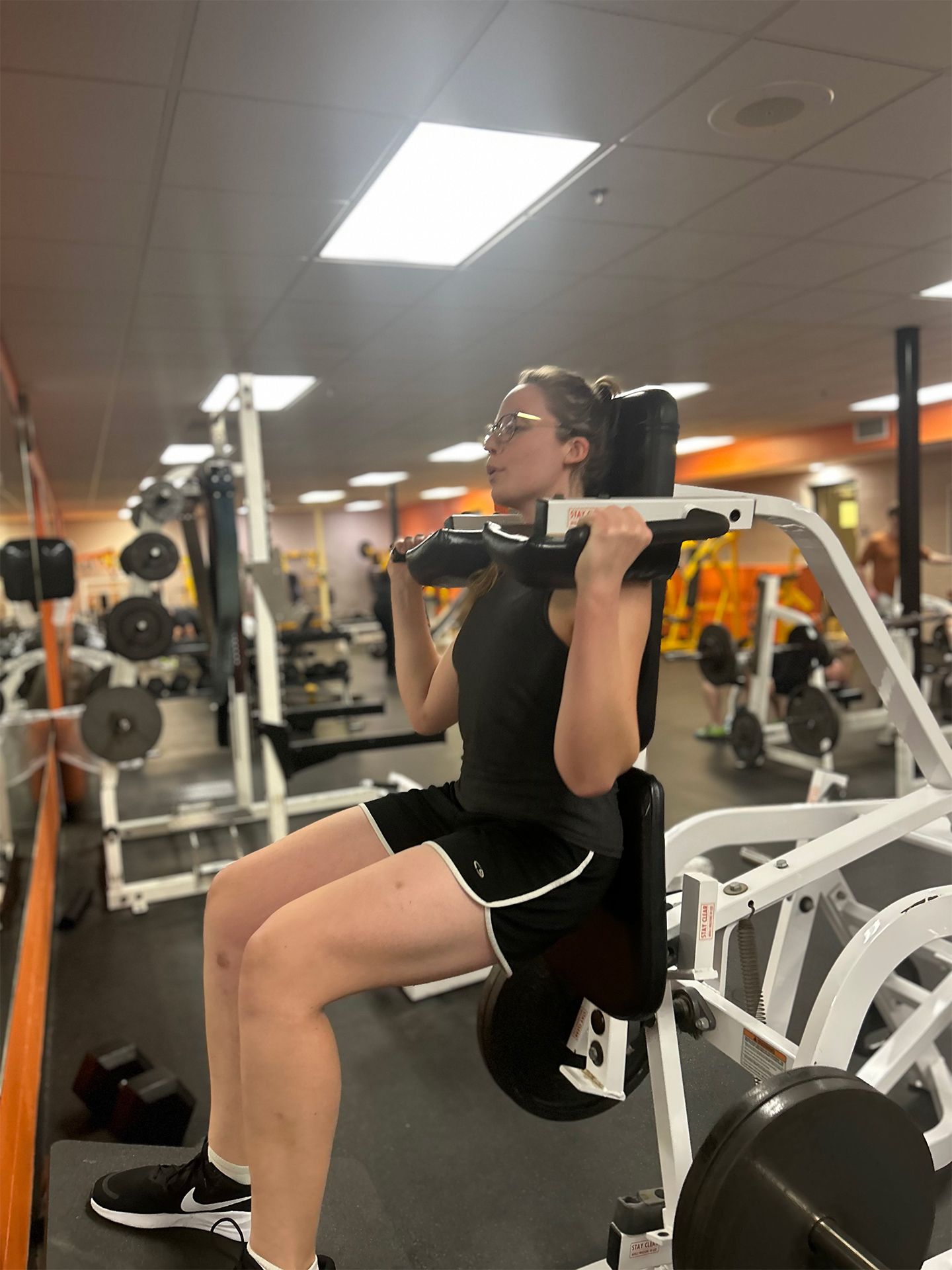
Woman using a seated squat machine at a gym.
By Lyssa Lovejoy, Owner, ACE, AFAA, ISSA, NETA • January 19, 2026
What Are Compound Exercises?
By Lyssa Lovejoy, Owner, ACE, AFAA, ISSA, NETA • January 2, 2026
It’s Not About Day One — It’s About Your Stage We put a lot of pressure on starting “right.” New month. New week. New Monday. The “perfect” Day 1. But real change doesn’t move in a straight line—it moves more like a spiral . People often cycle through readiness, action, and slip-ups before things finally stick. That’s normal, not failure. So instead of asking, “Did I start on the right day?” Try asking, “What stage am I in—and what do I need right now?” The 5 stages most people move through These stages are part of a well-known behavior change framework (often used in fitness and health coaching): ACE Fitness Pre-Contemplation – Not thinking about change yet. Contemplation – Thinking about it… weighing pros/cons. Preparation – Making small moves, getting ready. Action – Doing the workouts consistently (often defined as under 6 months). ACE Fitness M a intenance – Keeping it going long-term. The goal isn’t to force yourself into “Action” overnight. The goal is to match your next step to your stage . A few facts that take the pressure off For overall health, adults should aim for 150 minutes of moderate activity per week (or 75 minutes vigorous), plus 2 days of muscle strengthening . Those minutes can be broken up —it doesn’t have to be perfect or all at once. Consistency builds when you feel oriented and supported , not when you feel judged by the calendar. What to do at each stage (Fitness Evolution style) If you’re in Contemplation Your win is clarity. Decide why you’re doing this (energy, stress, confidence, strength, sleep). Pick a realistic first goal: “2 visits this week” beats “I’m changing my life starting tomorrow.” If you’re in Preparation Your win is setup. This is where we want you to feel grounded inside the club: Get oriented to the facility Learn where things are Meet a department head / staff leader Ask what your best “starter plan” looks like That’s where the magic begins—when you feel like you belong here. If you’re in Action Your win is repeatability. Keep it simple. Track attendance, not perfection. Build a schedule you can repeat on your worst week. If you’re in Maintenance Your win is staying connected. Add variety (a class, a new lift, a new challenge) Revisit your “why” Keep a support loop—because life will life. Let’s start here Not with “Day 1 pressure”… but with a next right step . ✅ Get A workout under your belt. ✅ Get comfortable in the building. ✅ Get connected to people who can guide you. And if you want a fun nudge, grab our Member Starter Card at the front desk—complete it and turn it in for a gift.
By Lyssa Lovejoy, Owner, ACE, AFAA, ISSA, NETA • June 16, 2025
If you’ve ever felt short on time but still wanted a workout that torches calories, builds strength, and challenges your limits, Tabata might just be your new best friend. 
Lyssa Lovejoy
By Lyssa Lovejoy, Owner, ACE, AFAA, ISSA, NETA • May 13, 2025
Why we sometimes lift better when someone’s watching and what that says about us I’ve caught myself doing it. You probably have too. You're mid-set, focused, grinding then someone walks by. Maybe it’s a trainer, a strong lifter, or someone attractive. Suddenly your back straightens, the bar feels lighter, and you’re lifting like you're auditioning for a superhero movie. So what’s happening here? Is it ego? Is it instinct? Is there science behind why we lift better when eyes are on us? Turns out, yes. And it’s not just vanity it’s psychology, biology, and a little bit of gym-floor drama. Do You Lift Harder When People Are Around? Here are a few questions worth asking yourself: Do you change your intensity when someone’s nearby? Are you more focused or more distracted when others are watching? Have you ever lifted heavier than planned just because you “felt watched”? Do you find yourself aiming for perfect form or a perfect impression? If you've said yes to any of these, you're not alone. And science has a name for it. The Science of Being Seen: Social Facilitation & the Observer Effect Back in 1898, a psychologist named Norman Triplett studied cyclists and found they performed better when riding with others than alone. Since then, dozens of studies have confirmed what we feel in our bones: we often perform better when someone is watching. This is called social facilitation when the mere presence of others boosts our performance on tasks we’ve practiced. In a gym setting, this can translate to: Better form under the mirror or peer pressure Lifting more weight during a crowded workout session Higher motivation in group classes or partner workouts The observer effect also plays a role. Knowing you’re being watched, even subconsciously, alters behavior. This effect is so powerful it's even used in productivity studies and animal behavior research. In the gym, it can either sharpen your focus or lead you down the path of ego lifting. The Hormonal Boost: Testosterone & Competition There's also a physiological piece. When you're in a competitive or observed environment, your body releases testosterone , which can increase aggression, confidence, and power output. That surge might explain why your barbell feels just a bit lighter when you think someone’s checking your form (or your glutes). The Fine Line: Motivation vs Ego Lifting Let’s be real there’s a dark side. That extra rep may look cool, but if it’s compromising your form or pushing past your recovery threshold, it’s not strength it’s show. Ego lifting adding weight to impress, not progress "is a trap". It can lead to: Injury Burnout Inconsistent gains A training plan that’s built for the crowd, not your goals Are You Lifting for Progress or Performance? There’s a difference between lifting to show up and lifting to show off. So ask yourself: Who are you really lifting for? Are your gym gains built on consistency or on comparisons? If no one was watching, would you still train this hard? Your best lifts should be about you. The real you. The one who shows up even when the gym is empty and no one's filming. How to Harness the Watchful Eye (Without Losing Yourself) Here’s how to channel that external energy without letting it derail you: ✅ Use mirrors to check form, not flex ego ✅ Record your lifts for feedback's just followers ✅ Train with a partner who pushes, not pressures ✅ Let attention focus you, not define you You can let the spotlight sharpen your drive, but don’t let it blind your discipline. Final Thoughts: Be Your Own Hype Crew When people are watching, it's easy to lift like the world is your stage. But when no one’s there? That’s where champions are made. So yeah… maybe this lift is about you. But not because you want applause. Because you want growth. Power. Progress. You're not vain for wanting to be seen. You're human. Just remember: the most important audience is the one in your own head. REFERENCES: Dr. Deborah Feltz – Michigan State University Leading researcher in sport psychology, self-efficacy, and how social presence influences athletic performance. Dr. Michelle Segar – University of Michigan Expert in exercise motivation and sustainable behavior change; author of No Sweat and The Joy Choice. Dr. Alia Crum – Stanford University Director of the Stanford Mind & Body Lab; studies how mindset and perception impact physical health and performance. Dr. Robert J. Vallerand – Université du Québec à Montréal Creator of the Dualistic Model of Passion; research focuses on motivation, passion, and optimal performance. Dr. Kai Laird – Independent Sport Psychology Consultant Specializes in mindset, visualization, and performance under pressure for elite athletes.
April 7, 2025
Childhood obesity is one of the most serious public health challenges of the 21st century. According to the American Council on Exercise (ACE), nearly 1 in 5 children (19.7%) in the U.S. are classified as obese, a number that has tripled over the last 40 years. The consequences aren't just about physical appearance — they impact a child’s entire future, increasing the risk for conditions like diabetes, heart disease, and mental health issues. At Fitness Evolution, we believe every child, teen and young adult deserves a strong, healthy start. Understanding the problem is the first step toward creating solutions that work.