The Importance of Compound Exercises in Your Fitness Training

Lyssa Lovejoy, Owner, ACE, AFAA, ISSA, NETA • January 19, 2026

What Are Compound Exercises?

Compound exercises are movements that engage two or more joints and multiple muscle groups simultaneously. This type of training mimics real-life activities and enhances functional fitness, making it essential for anyone looking to improve their overall performance, whether in sports, daily life, or simply seeking to get fit.

Benefits of Compound Exercises

  1. Efficiency: By targeting multiple muscle groups at once, compound exercises allow you to get more done in a shorter amount of time. This is particularly advantageous for those with busy schedules.
  2. Increased Strength: Engaging several muscles in one movement leads to greater strength gains. As these exercises often involve heavier weights, they promote muscle growth more effectively than isolation exercises.
  3. Improved Coordination: Since compound movements require the coordination of various muscle groups, they help in enhancing your balance, stability, and functional movement—important aspects for athletes and fitness enthusiasts alike.
  4. Greater Caloric Burn: Compound exercises tend to increase heart rate and energy expenditure, which can aid in fat loss and boost metabolic efficiency.
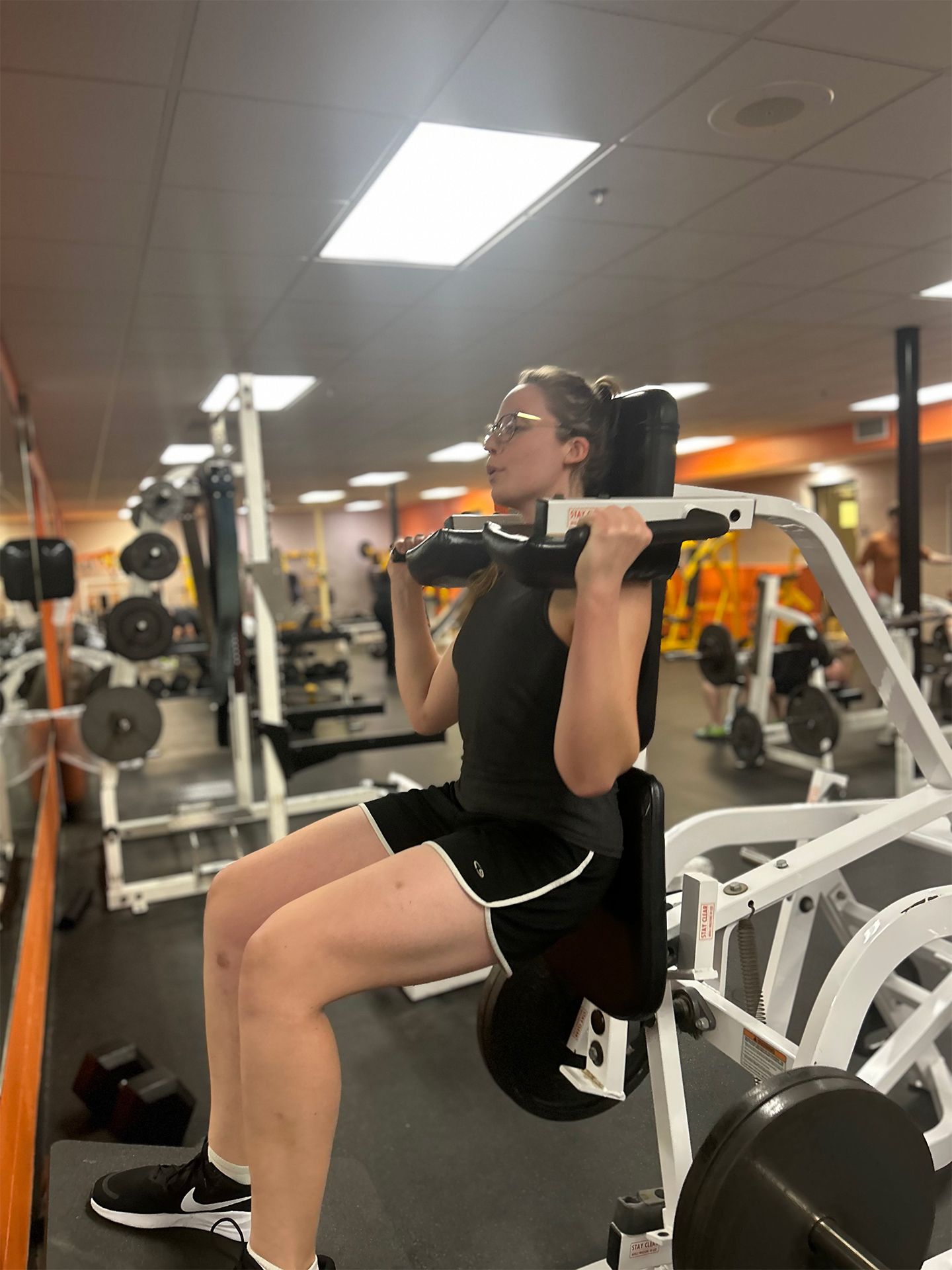
Woman using a seated squat machine at a gym.

The Impact of Compound Exercises on Movement and Functional Fitness

When discussing fitness training, understanding how the body moves is crucial for optimizing performance and daily function. Compound exercises play a pivotal role in enhancing our movement capabilities through several key mechanisms. Here's a deeper look into how these exercises affect overall body movement and functional fitness.

1. Engagement of Multiple Muscles and Joints

Compound exercises involve multiple muscle groups and joints working in concert, which is how our bodies naturally function in daily life. For example, when you perform a squat, you engage not only your legs but also your core, back, and even your arms if you're holding weights. This multi-joint engagement reflects the way we perform many activities, from sitting and standing to lifting and carrying objects.


Impact: By training your body to work as a cohesive unit, you enhance its ability to perform functional movements efficiently. This coordination is particularly important in sports and activities requiring agility and balance, as well as in everyday actions like climbing stairs or bending to pick something up.

2. Improved Neuromuscular Coordination

Engaging multiple muscles simultaneously in compound movements fosters neuromuscular adaptations, meaning that your brain becomes more adept at communicating effectively with your muscles. The more often you perform these exercises, the better your nervous system becomes at activating the appropriate muscles in a coordinated manner.


Impact: Enhanced neuromuscular coordination translates to smoother, more powerful movements. This is especially beneficial in athletic settings, where quick, complex movements are often required. Improved coordination also reduces the risk of injury, as a well-coordinated body is less likely to suffer strains or sprains during sudden movements.

3. Functional Strength Development

Compound exercises build functional strength, which is the ability of your body to perform everyday tasks effectively. Unlike isolation exercises that focus on single muscles, compound movements train muscle groups in ways that mimic everyday activities.


Impact: Functional strength gained through compound exercises enables individuals to perform daily tasks—like lifting, pushing, or pulling—more efficiently and with less effort. This functional carryover is crucial for maintaining independence as people age, reducing the likelihood of falls and injuries.

4. Enhanced Core Stability and Balance

Many compound exercises require a strong stable core to maintain proper form. For instance, during deadlifts or squats, your core muscles must engage to stabilize your torso and support the movement.


Impact: A stronger core contributes to overall stability and balance, fundamental aspects of functional movement. Improved core stability enhances postural alignment, which is vital for moving efficiently and safely. Better balance and stability can significantly reduce the risk of falls and enhance performance in sports that require agility.

5. Increased Range of Motion

Compound exercises, through their dynamic nature, often encourage a greater range of motion compared to isolation exercises. Movements like lunges or overhead presses require full-body engagement and the ability to move through various planes of motion.


Impact: This increased range of motion helps improve flexibility and joint health. Enhanced mobility is essential for overall movement patterns, facilitating not just athletic performance but also daily activities such as bending, reaching, or twisting.

6. Enhanced Cardiovascular Endurance

Many compound exercises can be performed in a way that elevates heart rate. For example, circuit training that mixes exercises like kettlebell swings and push-ups can provide both strength training and cardiovascular benefits.


Impact: Improved cardiovascular endurance supports overall fitness levels, enabling the body to sustain physical activity for longer periods without fatigue. This endurance is beneficial not only for athletes but for anyone seeking to improve their stamina in daily tasks.

Conclusion

Incorporating compound exercises into your fitness routine goes beyond mere strength building. These exercises have profound effects on movement efficiency, functional fitness, and overall health. By training how the body naturally moves through multi-joint, multi-muscle engagements, individuals can enhance their performance in daily activities, reduce injury risk, and improve overall quality of life. Understanding and embracing the principles behind compound movements allows for a more holistic approach to fitness, paving the way for sustainable and functional athleticism.

Examples of Compound Exercises

Here are some key compound exercises to incorporate into your training routine:


  1. Squats: Engages the quads, hamstrings, glutes, and core, targeting lower body strength.
  2. Deadlifts: Works the entire posterior chain, including the back, glutes, and hamstrings, while also emphasizing core stability.
  3. Bench Press: Engages the chest, shoulders, and triceps, promoting upper body strength.
  4. Lunges: Targets the legs and core, while also improving balance and coordination.
  5. Push-Ups: A bodyweight exercise that activates the chest, shoulders, arms, and core.
  6. Pull-Ups: Focuses on the back, shoulders, and arms, improving upper body strength.
  7. Kettlebell Swings: Engages the entire body, especially the hips and core, enhancing power and endurance.

A Sample Compound Workout

Here's a balanced compound exercise workout that you can try. Aim for 3 sets of 8-12 repetitions for each exercise:


  1. Squats: Use a barbell or kettlebell to add resistance.
  2. Deadlifts: Choose a weight that challenges your form without sacrificing safety.
  3. Bench Press or Push-Ups: Depending on your equipment availability.
  4. Pull-Ups: Use assistance if needed to complete the set.
  5. Lunges: Add weights for increased intensity.
  6. Kettlebell Swings: Focus on form to maximize effectiveness.

Conclusion

Incorporating compound exercises into your fitness training can revolutionize your approach to building strength and improving functional fitness. Not only will you save time in the gym, but you’ll also experience better results in strength, muscle mass, and overall physical coordination. Embrace these powerful movements in your workouts and watch your fitness journey evolve. Happy training!

By Lyssa Lovejoy, Owner, ACE, AFAA, ISSA, NETA January 2, 2026
It’s Not About Day One — It’s About Your Stage We put a lot of pressure on starting “right.” New month. New week. New Monday. The “perfect” Day 1. But real change doesn’t move in a straight line—it moves more like a spiral . People often cycle through readiness, action, and slip-ups before things finally stick. That’s normal, not failure. So instead of asking, “Did I start on the right day?” Try asking, “What stage am I in—and what do I need right now?” The 5 stages most people move through These stages are part of a well-known behavior change framework (often used in fitness and health coaching): ACE Fitness Pre-Contemplation – Not thinking about change yet. Contemplation – Thinking about it… weighing pros/cons. Preparation – Making small moves, getting ready. Action – Doing the workouts consistently (often defined as under 6 months). ACE Fitness M a intenance – Keeping it going long-term. The goal isn’t to force yourself into “Action” overnight. The goal is to match your next step to your stage . A few facts that take the pressure off For overall health, adults should aim for 150 minutes of moderate activity per week (or 75 minutes vigorous), plus 2 days of muscle strengthening . Those minutes can be broken up —it doesn’t have to be perfect or all at once. Consistency builds when you feel oriented and supported , not when you feel judged by the calendar. What to do at each stage (Fitness Evolution style) If you’re in Contemplation Your win is clarity. Decide why you’re doing this (energy, stress, confidence, strength, sleep). Pick a realistic first goal: “2 visits this week” beats “I’m changing my life starting tomorrow.” If you’re in Preparation Your win is setup. This is where we want you to feel grounded inside the club: Get oriented to the facility Learn where things are Meet a department head / staff leader Ask what your best “starter plan” looks like That’s where the magic begins—when you feel like you belong here. If you’re in Action Your win is repeatability. Keep it simple. Track attendance, not perfection. Build a schedule you can repeat on your worst week. If you’re in Maintenance Your win is staying connected. Add variety (a class, a new lift, a new challenge) Revisit your “why” Keep a support loop—because life will life. Let’s start here Not with “Day 1 pressure”… but with a next right step . ✅ Get A workout under your belt. ✅ Get comfortable in the building. ✅ Get connected to people who can guide you. And if you want a fun nudge, grab our Member Starter Card at the front desk—complete it and turn it in for a gift.
By Lyssa Lovejoy, Owner, ACE, AFAA, ISSA, NETA June 16, 2025
If you’ve ever felt short on time but still wanted a workout that torches calories, builds strength, and challenges your limits, Tabata might just be your new best friend. 
Lyssa Lovejoy
By Lyssa Lovejoy, Owner, ACE, AFAA, ISSA, NETA May 13, 2025
Why we sometimes lift better when someone’s watching and what that says about us I’ve caught myself doing it. You probably have too. You're mid-set, focused, grinding then someone walks by. Maybe it’s a trainer, a strong lifter, or someone attractive. Suddenly your back straightens, the bar feels lighter, and you’re lifting like you're auditioning for a superhero movie. So what’s happening here? Is it ego? Is it instinct? Is there science behind why we lift better when eyes are on us? Turns out, yes. And it’s not just vanity it’s psychology, biology, and a little bit of gym-floor drama. Do You Lift Harder When People Are Around? Here are a few questions worth asking yourself: Do you change your intensity when someone’s nearby? Are you more focused or more distracted when others are watching? Have you ever lifted heavier than planned just because you “felt watched”? Do you find yourself aiming for perfect form or a perfect impression? If you've said yes to any of these, you're not alone. And science has a name for it. The Science of Being Seen: Social Facilitation & the Observer Effect Back in 1898, a psychologist named Norman Triplett studied cyclists and found they performed better when riding with others than alone. Since then, dozens of studies have confirmed what we feel in our bones: we often perform better when someone is watching. This is called social facilitation when the mere presence of others boosts our performance on tasks we’ve practiced. In a gym setting, this can translate to: Better form under the mirror or peer pressure Lifting more weight during a crowded workout session Higher motivation in group classes or partner workouts The observer effect also plays a role. Knowing you’re being watched, even subconsciously, alters behavior. This effect is so powerful it's even used in productivity studies and animal behavior research. In the gym, it can either sharpen your focus or lead you down the path of ego lifting. The Hormonal Boost: Testosterone & Competition There's also a physiological piece. When you're in a competitive or observed environment, your body releases testosterone , which can increase aggression, confidence, and power output. That surge might explain why your barbell feels just a bit lighter when you think someone’s checking your form (or your glutes). The Fine Line: Motivation vs Ego Lifting Let’s be real there’s a dark side. That extra rep may look cool, but if it’s compromising your form or pushing past your recovery threshold, it’s not strength it’s show. Ego lifting adding weight to impress, not progress "is a trap". It can lead to: Injury Burnout Inconsistent gains A training plan that’s built for the crowd, not your goals Are You Lifting for Progress or Performance? There’s a difference between lifting to show up and lifting to show off. So ask yourself: Who are you really lifting for? Are your gym gains built on consistency or on comparisons? If no one was watching, would you still train this hard? Your best lifts should be about you. The real you. The one who shows up even when the gym is empty and no one's filming. How to Harness the Watchful Eye (Without Losing Yourself) Here’s how to channel that external energy without letting it derail you: ✅ Use mirrors to check form, not flex ego ✅ Record your lifts for feedback's just followers ✅ Train with a partner who pushes, not pressures ✅ Let attention focus you, not define you You can let the spotlight sharpen your drive, but don’t let it blind your discipline. Final Thoughts: Be Your Own Hype Crew When people are watching, it's easy to lift like the world is your stage. But when no one’s there? That’s where champions are made. So yeah… maybe this lift is about you. But not because you want applause. Because you want growth. Power. Progress. You're not vain for wanting to be seen. You're human. Just remember: the most important audience is the one in your own head. REFERENCES: Dr. Deborah Feltz – Michigan State University Leading researcher in sport psychology, self-efficacy, and how social presence influences athletic performance. Dr. Michelle Segar – University of Michigan Expert in exercise motivation and sustainable behavior change; author of No Sweat and The Joy Choice. Dr. Alia Crum – Stanford University Director of the Stanford Mind & Body Lab; studies how mindset and perception impact physical health and performance. Dr. Robert J. Vallerand – Université du Québec à Montréal Creator of the Dualistic Model of Passion; research focuses on motivation, passion, and optimal performance. Dr. Kai Laird – Independent Sport Psychology Consultant Specializes in mindset, visualization, and performance under pressure for elite athletes.
April 7, 2025
Childhood obesity is one of the most serious public health challenges of the 21st century. According to the American Council on Exercise (ACE), nearly 1 in 5 children (19.7%) in the U.S. are classified as obese, a number that has tripled over the last 40 years. The consequences aren't just about physical appearance — they impact a child’s entire future, increasing the risk for conditions like diabetes, heart disease, and mental health issues. At Fitness Evolution, we believe every child, teen and young adult deserves a strong, healthy start. Understanding the problem is the first step toward creating solutions that work.
Lyssa Lovejoy
By Lyssa Lovejoy, Co-Owner, Personal Trainer February 25, 2025
4 Essential Questions to Ask Yourself About Your Fitness Journey It's all too easy to let fitness take a backseat after the New Year and when the resolutions fade. Whether you're just starting out or have been working out for a while, it's crucial to take a step back and reflect on your fitness goals. Checking in with a trainer can provide you with the insights you may need to make progress. Here are 4 important questions to ask yourself that can help guide your fitness journey in the meantime: 1. What are my specific fitness goals? Understanding your fitness goals is the cornerstone of any successful program. Are you looking to lose weight, build muscle, increase endurance, or simply maintain a healthy lifestyle? Each goal requires a different approach, and a trainer can help you develop a tailored plan that aligns with your objectives. If your goals feel vague or unclear, it’s time to connect with a trainer who can help you articulate them better and create actionable steps to achieve them. Don’t wait—your goals deserve clarity! 2. Am I consistently challenging myself? Progress is rooted in challenge. If your workouts have become predictable or easy, you might not be pushing yourself enough. Ask yourself when you last increased the weight you lift, tried a new exercise, or extended your cardio session. These small adjustments can lead to significant gains over time. A trainer can assess your current routine and help you incorporate new challenges that keep you engaged and progressing. Remember, comfort zones are overrated, and now is the time to step out of yours! 3. How do I feel both physically and mentally about my fitness journey? Your mental and physical well-being is just as important as the numbers on the scale or the weights you lift. Take a moment to reflect on how you feel about your workouts, nutrition, and overall health. Are you excited to train, or are you experiencing burnout? A trainer can help you find the right balance and offer strategies to overcome obstacles, ensuring that you’re not only achieving results but also enjoying the process. Don’t hesitate to reach out to ensure your approach supports both your body and your mind. 4. Am I aware of my body’s strengths and weaknesses? Understanding your body’s unique strengths and weaknesses is key to maximizing your fitness potential. Are you aware of specific areas that need improvement, such as flexibility, strength, or balance? An assessment can provide you with valuable insights into your body’s capabilities, helping you tailor your workouts to address these areas effectively. By pinpointing what to focus on, you can make your efforts more efficient and rewarding. Don’t wait—seize the chance to unlock your full potential through a professional assessment and take your fitness journey to the next level! Final Thoughts Yes, I will always recommend talking to an expert whether you train or not, it’s our job to educate! However, asking yourself these questions is a vital step in taking control of your fitness journey. Don’t let uncertainty keep you from the progress you deserve! To truly gauge where you stand, here are three simple tests you can perform to see if you’re on track: The Talk Test : During your workouts, can you carry on a conversation? If you're breathing too hard to speak, you might need to reassess the intensity of your routine. Try for a balance where you’re challenged but not overwhelmed. Mirror Test : Take a good look in the mirror. Are you noticing changes in your physique and posture? Sometimes visual cues can be a great indicator of progress. Celebrate the small victories! Energy Levels : Pay attention to how you feel throughout the day. If you're energized and motivated, chances are your fitness routine is working for you. If fatigue is your constant companion, it’s a sign to consult a trainer about potential adjustments. Taking actionable steps today can lead to empowering results tomorrow. Remember, reaching out to an expert can unlock the next level of your fitness potential. The journey is yours—don’t hesitate to seize the opportunity and make it the best it can be! Your future self will absolutely thank you for it!
Ella Gotham
By Ella Gotham February 11, 2025
Strength Training-The Key to Reclaiming Your Life By. Ella Gotham Certified Group Fitness, National Exercise Trainers Association
By Megan Leipholtz January 9, 2025
Psst... which one of them has Parkinson's? By. Megan Leipholtz Certified Personal Trainer and Head Coach Rock Steady Boxing
By Raelynn Dickey, NDTR , Accreditated Personal Trainer December 9, 2024
Holiday Hacks By. Raelynn Dickey, NDTR , Accreditated Personal Trainer
By Tracy Vincent, CPT, Assistant Manager Zimmerman November 21, 2024
How to Stay Motivated to Work Out (Even on the Tough Days) By. Tracy Vincent, CPT, Assistant Manager Zimmerman
By Lyssa Lovejoy- Owner/Trainer September 12, 2024
Back to School Fitness By. Lyssa Lovejoy - Owner/Trainer